
Growing out bangs takes roughly 6 to 12 months from a full fringe to fully blended length, depending on where you start and how fast your hair grows. You can't biologically speed that up, but you can make every stage look intentional instead of accidental, and that's what stops most people from grabbing the scissors again. The real strategy is part styling, part smart maintenance, and a lot of knowing what to expect so the awkward phases don't catch you off guard.
How to Grow Out Bangs Fast: Reddit-Style Timeline Guide

Marcus Vickers
22 May 2026

How fast your hair actually grows (and what 'fast' really means here)
Scalp hair grows about half an inch per month on average, or roughly 1 centimeter. StatPearls (NCBI Bookshelf) reports hair grows at about 1 cm per month on average (approximately 0.35 mm per day). That's the figure from Johns Hopkins, StatPearls, and basically every credible source you'll find. Some people grow a little faster, some slower, and growth can slow with age, but for planning purposes, half an inch a month is your working number. There is no supplement, oil, or scalp massage that meaningfully changes that rate, despite what you'll see all over Reddit and Instagram.
What 'growing out bangs fast' actually means in practice is minimizing how long each awkward stage feels, not compressing the biology. The fastest-looking grow-out happens when you're styling your bangs with purpose at every stage instead of hoping they'll just blend in on their own. That's completely within your control.
What to expect at each stage as your bangs get longer
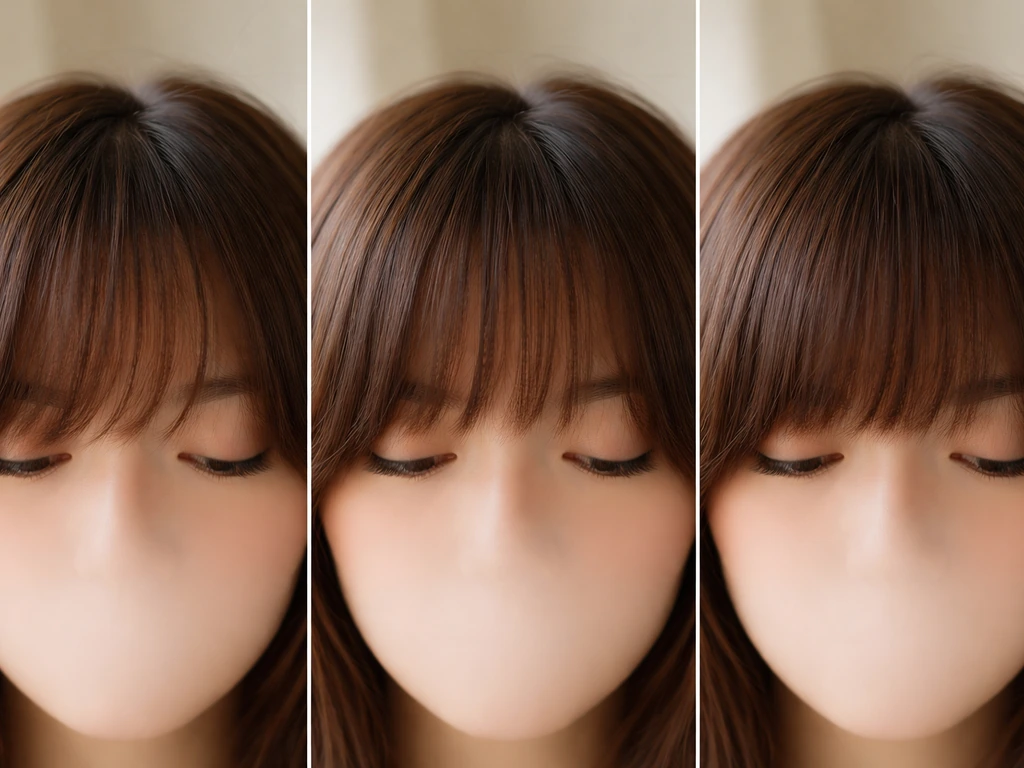
The first month is actually the easiest. Your bangs still mostly sit where they always did, just very slightly longer. Most people don't even notice a difference yet, and you probably don't need to change your styling routine much.
Weeks four through eight are the classic awkward phase. This is when bangs hit roughly the eyebrow-to-nose bridge zone, which is too long to sit flat but too short to tuck behind your ear or move cleanly to the side. One Reddit user described this as the stage where they couldn't leave the house without a plan, and that's honestly pretty accurate. The bangs start to develop their own ideas about where they want to go, and those ideas are usually bad. This is the stage where most people panic and cut, which just resets the clock.
By month three, your bangs are likely at or just past nose length, and this is where things genuinely start to get manageable. You can start training them to fall to one side, tuck them behind your ear when they're longer, or blend them into a deep side part that actually looks intentional rather than cobbled together. If you want more specific ideas for training and blending, see our guide on how to grow curtains hairstyle for the same side-and-tuck direction tactics to one side, tuck them behind your ear.
Months four through six bring you into cheekbone-to-chin territory. At this length, most people find the grow-out stops being a daily battle. You're starting to blend the bangs into the rest of your hair naturally, especially if you've been doing light maintenance trims to soften the edge. If you started with curtain bangs or face-framing layers, this is where the separation from the rest of your hair can become noticeable, and blending strategy matters more than ever.
Six to twelve months is the final stretch. A full blunt fringe can take the longer end of that range to fully integrate. Curtain bangs typically blend faster because their angled, tapered shape naturally merges with layers more easily than a straight-across fringe does.
| Stage | Approx. Length | What's Happening | Main Challenge |
|---|---|---|---|
| Month 1 | Just past original cut | Still sitting mostly in place | Patience, mostly |
| Weeks 4–8 | Eyebrow to nose bridge | Too long to lay flat, too short to move aside | The worst awkward phase |
| Month 3 | Nose to upper lip | Can start to train direction | Cowlicks, curling under |
| Months 4–6 | Cheekbone to chin | Blending becoming possible | Blending gaps in the cut |
| Months 6–12 | Chin and beyond | Integration with rest of hair | Evenness, layer blending |
Day-to-day styling through the awkward stages
This is where most of the practical work happens. The deep side part with a bobby pin is probably the most cited solution on Reddit for a reason: it works at almost every stage of the grow-out. Pull your bangs to the side toward the longer hair, use a bobby pin to anchor them, and they look like a styling choice rather than a problem. You can use a single pin or cross two pins in an X shape for stronger hold.
Clip solutions become more useful once bangs hit the mid-nose range and longer. A small claw clip, a barrette, or even a headband can hold growing bangs back cleanly. Some people use clip-in fringe extensions while their real bangs grow, which genuinely works if you want to maintain the look while biology catches up.
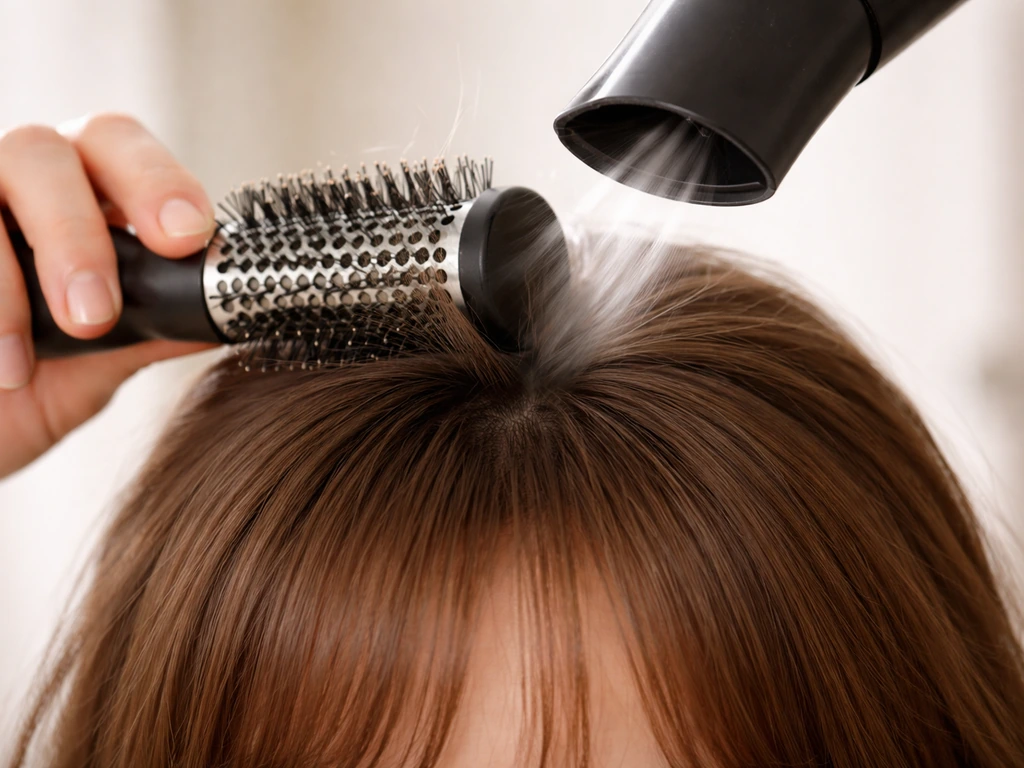
For blow-dry direction, the technique that makes the biggest difference is this: blow dry bangs before styling the rest of your hair, while they're still wet. Use a round brush behind and under the bangs, pulling them forward toward your nose rather than straight down, then sweep them in the direction you want them to fall. Hold that position until the hair cools. This trains the hair to move to the side naturally over time instead of flopping forward into your face. If you're dealing with flyaways or pieces that refuse to sit right, you can also use styling tricks like blow-drying in the right direction, pinning, and choosing the right hold so bangs grow out more smoothly.
A lightweight product sprayed about 8 to 10 inches away from the hair helps hold bangs without weighing them down or creating that heavy, greasy look. Avoid applying anything heavy directly at the roots, since that accelerates the greasy feeling and makes bangs look flat. For the side-part method specifically, you need to consistently reinforce the direction every time you style, otherwise the hair keeps wanting to fall back to its original position. Training takes a few weeks of repetition to stick.
Products and habits that support healthy growth
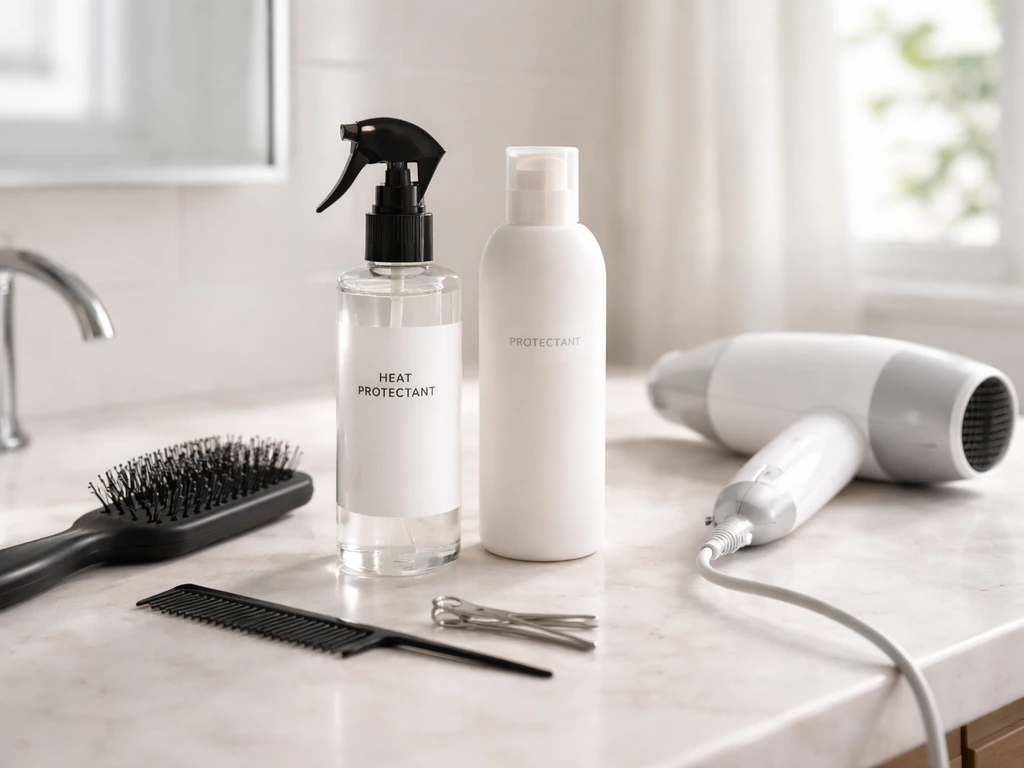
No product grows hair faster, but a few habits genuinely reduce breakage and keep the hair you have growing in healthier condition. That matters because breakage can make bangs look like they're not growing when really they're just snapping off at the ends.
- Use a heat protectant every time you blow dry or flat iron bangs. Because bangs get styled more frequently than the rest of the hair, they take more cumulative heat damage. A lightweight mist works better than a thick spray for fine bangs since it won't weigh them down. Apply it by misting onto your hands and running it through rather than spraying directly on the roots.
- Go easy on the heat setting. The lowest effective temperature for your hair type protects the hair shaft and reduces long-term frizz.
- Be careful with towel drying. Rough terrycloth can rough up the hair cuticle and create frizz, especially for wavy or fine bangs. A microfiber towel or a soft T-shirt works better for blotting the fringe section.
- Keep the scalp and ends in decent condition with regular shampooing and a conditioner that doesn't sit on the roots. Bangs can get oily faster than the rest of the hair because they sit against the forehead, so a slightly more frequent wash cycle for just the bang area can help.
- Skip the biotin megadoses unless you're actually deficient. A balanced diet handles what your hair needs, and the research on supplementation for people who aren't deficient is thin.
How to handle trims without resetting your progress
This is where a lot of people accidentally sabotage themselves. The instinct when bangs look ragged or uneven is to trim them, but trimming them back to where they started undoes months of growth. The goal during a grow-out isn't to skip trims entirely, it's to trim strategically.
A good rule is to get a light maintenance trim every 6 to 8 weeks, but that trim should only address dryness, split ends, or extreme unevenness. Healthline also recommends hairstylist-style maintenance trims for bangs (and hair) around every 6 to 8 weeks to keep the length steady, with some goals taking up to about 12 weeks. It should never take the bangs back to a shorter starting point. Instead, ask your stylist to soften the front edge and blend the bang section into the rest of your hair. This directional shaping, where the stylist subtly adjusts the angle of the fringe to meet the growing pieces, keeps everything looking intentional without chopping length.
The sides and layers matter here too. If the rest of your haircut has layers that were cut to frame the original bang length, those layers may start to look disconnected as the bangs grow past them. Getting the sides and surrounding layers lightly adjusted during your maintenance trims helps the bangs blend rather than sticking out as a separate, obviously growing section. This is especially true for curtain bangs, where unblended lengths can create a look that separates from the hairline in a way that draws more attention to the grow-out rather than less.
If you feel the urge to trim at home because the bangs are in your eyes or driving you crazy, trim no more than a quarter inch and only from the interior of the fringe, not the face-framing edge. Better yet, use a bobby pin and wait for your next salon appointment.
Ways to make growth look faster without actually changing the rate
You can't change the biology, but you can change how noticeable the grow-out is at each stage, and that's basically the same thing from a practical standpoint.
- Train a new part early. The sooner you start reinforcing a deep side part or a center part that sweeps bangs to the side, the sooner it becomes the natural default. Hair has muscle memory of sorts, and consistent repetition over two to three weeks makes the new direction stick.
- Use heat styling intentionally, not just to tame. Using a round brush or a flat iron to direct bangs where you want them as they grow helps accelerate the training effect. Keep heat on the lower end of your tool's range, always use a protectant, and let the hair cool completely before releasing the direction.
- Lean into accessories as styling choices, not just band-aids. A headband, a clip, or a half-up style doesn't have to read as 'I'm hiding my bangs.' Many of these looks are genuinely flattering at every stage.
- Time your last trim before the grow-out begins. If you're planning to grow out bangs, getting a light soft-edge trim right before you commit gives you the cleanest starting shape and means you won't need to touch them for longer.
- Plan around a calendar milestone if it helps. If you have a wedding, a job interview, or another event in six months, work backward from that date using the half-inch-per-month figure to know where your bangs will realistically be. Managing expectations makes the grow-out psychologically easier.
Fixing the most common bang grow-out problems
Cowlicks making bangs split or stick up
A cowlick at the hairline is genuinely one of the hardest parts of the grow-out because it fights you at every stage. The most effective fix is the blow-dry training technique: apply a small amount of product, use a round brush to pull the hair directly against the cowlick's natural direction, and hold it there with the dryer on medium heat until it's fully dry. The longer bangs get, the more the weight of the hair overpowers the cowlick naturally, so this gets easier over time rather than harder.
Bangs curling or flipping into your eyes
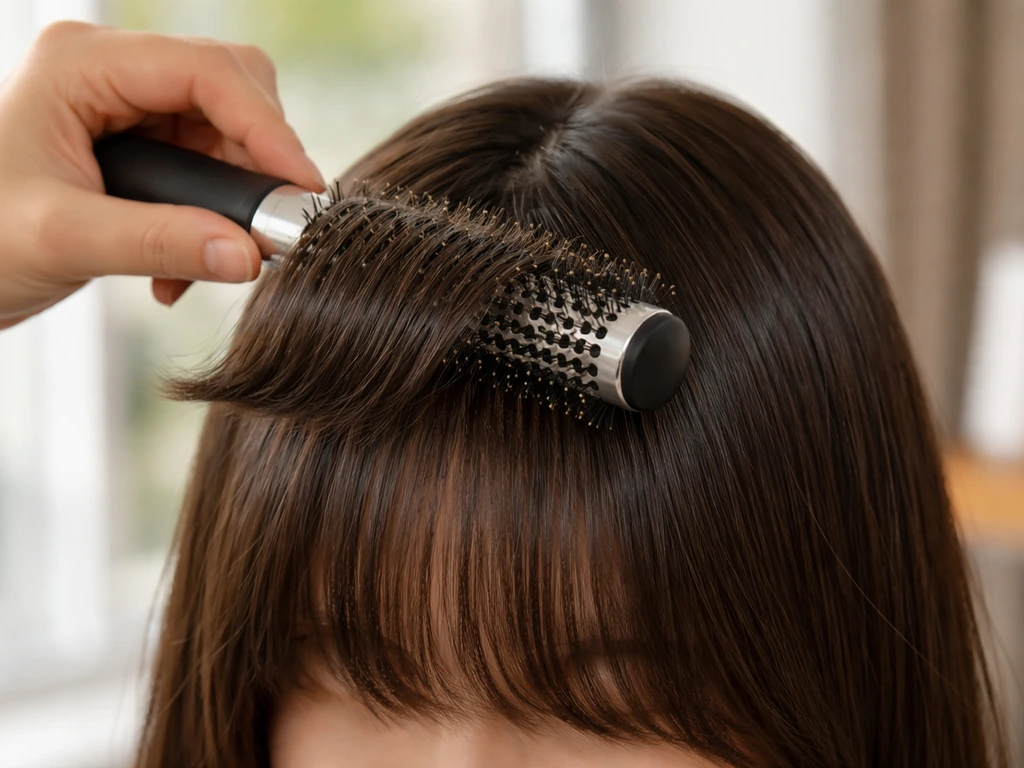
This usually happens in the two to three inch length range. The ends haven't got enough weight to pull straight yet, so they curl under or flip out at the sides. The round brush blow-dry technique (pulling forward and then sweeping to the side while the hair is still warm) is the fix here. Some people find that a very small amount of a flexible hold product run through the ends keeps the flip under control on humid or hot days. If you're getting flare at the sides specifically, the issue is often that you're releasing the hair before it's cooled completely. Always wait a beat after the dryer is off.
Uneven bangs (one side grows faster or sits differently)
Most people have one side that grows or behaves slightly differently. If one bang piece is noticeably longer, resist the urge to trim the longer side to match the shorter one, because that sacrifices the progress on the faster-growing side. Instead, use your styling direction to work with the difference. Sweeping bangs toward the longer side naturally disguises unevenness. Bring this up at your next maintenance trim so your stylist can blend the difference without cutting into overall length.
Bangs not blending into the rest of the hair
This is especially common with curtain bangs and face-framing pieces, where the bang section sits at a clearly different length from the surrounding hair. If the pieces look like they're floating separately from the rest of the haircut, the fix is usually a blending trim on the surrounding layers rather than cutting the bangs themselves. Ask for the layers around your face to be softened so they graduate more smoothly toward the bang section. Without that blending, the grow-out can look patchy or create an odd separation at the hairline. This is a good reason to keep regular appointments rather than avoiding the salon entirely while growing out.
Looking like a 'side-bang combover'
This happens when you try to train bangs to one side but haven't done it consistently enough for the direction to hold. The hair falls halfway to one side and then sort of gives up, which creates exactly the look you're trying to avoid. The fix is pure repetition: style in the same direction every single time for at least two to three weeks, reinforce it with a light-hold product, and let it cool in position before you move on with your day. Once the hair learns the direction, it holds it much more naturally.
If you're growing out curtain bangs specifically, some of the blending challenges are different from a blunt fringe because of the angled shape. If you are noticing the grow-out looking a bit weird, that's usually a cue that the angled shape needs extra blending at the awkward stages curtain bangs specifically. And if you're navigating this process after 50, when hair texture and density may have shifted, the same principles apply but you may find the hair trains to a direction more easily since it's often finer and more cooperative with styling direction. If you're wondering how to grow out bangs over 50, the same stage-by-stage approach works, but you may need a bit more patience and strategic maintenance to keep everything blending naturally. The overall journey is the same: consistent styling at each stage, strategic trims that don't reset your progress, and enough patience to get to the point where your bangs become part of the haircut again rather than a separate problem.
FAQ
How do I grow out bangs faster if my hair grows slower than 1 cm per month?
Use the same timeline logic but adjust the date markers. Measure from your starting length (at the center of your brow or between eyebrows) and estimate the next milestone by length gain (about 0.5 inch, 1 cm per month for average growth). If your growth feels slower, focus on staging, meaning you keep the “awkward” area styled and pinned, rather than expecting the blend to happen on a standard calendar schedule.
Is it okay to keep washing my bangs normally while growing them out?
Yes, but avoid heavy product buildup on the fringe. If your bangs look limp or greasy faster than the rest of your hair, rinse them thoroughly and keep conditioner off the roots and the top of the fringe where possible. Greasy buildup makes the blend look worse even when length is progressing.
Do I need to start using clips and bobby pins right away, or wait for the awkward stage?
You can start earlier than the “classic awkward” window if your bangs are already falling in your eyes or at an unflattering angle. The advantage of starting sooner is training consistency, but don’t over-secure at the very beginning if your hair is still long enough to sit naturally. Use the lightest hold that keeps them out of your face.
What’s the safest way to handle bangs that keep crossing my eyes during the first 6 to 8 weeks?
Use direction-based styling plus temporary containment. Blow-dry forward toward your nose, then sweep to the side you want them to fall, and anchor with a pin when needed (especially in the morning). If you can’t see clearly, wait on trimming and instead rely on a pin or headband until you can maintain the shape at a salon.
Can I use fringe extensions to cover the grow-out, and will they damage my real bangs?
They can work well, but treat them like a styling tool, not a long-term replacement. Clip-ins are safest when they are removed and reattached cleanly (no tugging at the hairline), and when you avoid pulling too tightly over the same spots every day. If your real bangs start breaking or thinning where clips sit, switch to less frequent use or a lighter attachment.
How often should I get my bangs trimmed while growing them out?
Aim for every 6 to 8 weeks, but keep the goal narrow. Ask for split-end and dryness cleanup and front-edge softening, not a reset to the original length. If your stylist needs to take length to blend, ask whether they can reduce the blend through angle and layering rather than shortening the fringe section.
What if one bang is longer than the other, and pinning makes the mismatch obvious?
Don’t trim the longer side to “catch up.” Instead, pin and sweep toward the longer side so the difference reads as intentional shape. At your next maintenance appointment, ask for blending of the surrounding layers so the shorter side catches the styling direction too, without cutting into the progress you already have.
Should I trim my bangs at home if they’re uneven or jagged?
If you do it, keep it minimal and targeted (about a quarter inch or less). Only refine the interior of the fringe, not the face-framing edge, because that edge defines the blend as the bangs grow. The safer alternative is to wait for a professional maintenance trim and request “soften and blend,” not “equalize.”
Why does my side-part training stop working after a few days?
Most of the time it’s inconsistency, not your hair suddenly changing. If you style toward the same side every single time, include blow-drying with a sweep and hold until cool, and use a light product, the direction usually sticks within a couple weeks. If it stops, check whether you’re skipping the blow-dry step or moving the hair before it cools.
What should I do if my bangs keep flipping out at the sides around the 2 to 3 inch stage?
It’s often a cooling problem. Pull with a round brush, keep the heat on while the hair is in position, then wait a beat after the dryer turns off before releasing. If humidity makes it worse, use a very small amount of flexible hold only on the ends, not the roots, to reduce flip without making the fringe heavy.
How can I tell whether the issue is a cowlick versus uneven growth?
Cowlick problems usually behave the same way every time (it keeps fighting in the same direction), and blow-dry training fixes it gradually. Uneven growth shows up as a true length difference between two sides or sections that persists even when pinned. If behavior is consistent, treat it as a cowlick and train; if length differs, treat it as a blending problem at trims.
Will growing out bangs over 50 require different products or techniques?
The same stage-by-stage approach still applies, but you may need more patience with hold and smoothing because density and texture can shift. Choose lighter products so bangs don’t look heavy, and be extra consistent with blow-dry direction and cooling before styling the rest of your hair.