
Growing out bangs over 50 takes roughly 6 to 12 months from a full fringe to a length that blends into the rest of your hair, and the process is slower and trickier than it was at 30 because hair grows a little less quickly with age, texture changes after menopause, and thinning or cowlicks can make the awkward in-between stages feel more noticeable. But it is completely doable with the right trim strategy, a few targeted styling moves for each stage, and products that handle the dryness and frizz that come with gray or coarser hair.
How to Grow Out Bangs Over 50: Timeline, Trims, Styling

Marcus Vickers
22 May 2026

What's different about growing out bangs after 50
Hair growth averages about half an inch (1.25 cm) per month, and that rate tends to slow as you age. So if you're expecting the same pace you remember from your 30s, you'll probably be disappointed. On top of that, hormonal shifts around and after menopause change hair texture in real ways: estrogen production drops, and that's directly linked to drier, more brittle strands, finer or coarser texture depending on your hair type, and sometimes a change in the direction your hair naturally falls. Gray hair is structurally different too. It tends to be wiry, more porous, and less cooperative when you're trying to train it to lie flat or sweep to one side.
Thinning is also more common at this stage. Some people notice the hairline receding slightly or density decreasing at the front of the scalp, which is exactly where bangs sit. That can make the grow-out look more sparse or patchy than it would on thicker hair. None of this means you should give up, but it does mean you need a slightly different approach than a generic grow-out plan written for someone in their 20s.
How long will this actually take
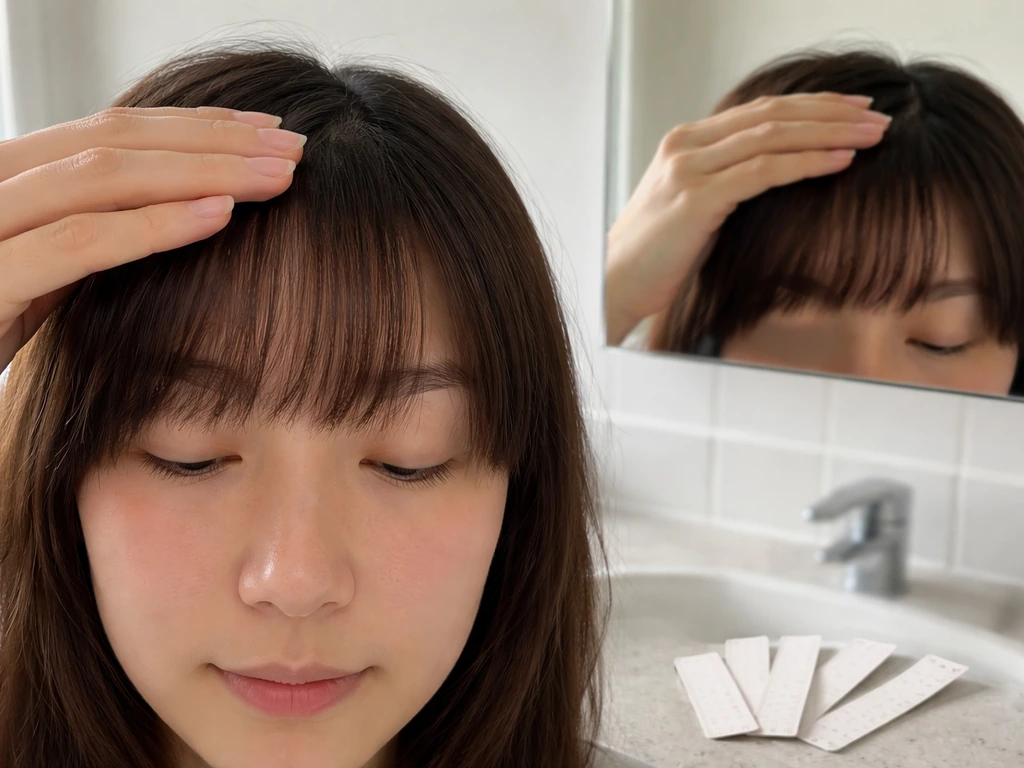
Here's a realistic timeline based on where your bangs are right now. These are averages, so give yourself a window rather than a fixed date.
| Starting bang length | Approximate grow-out time | Hardest stage |
|---|---|---|
| Very short (above brow) | 9–12+ months | Months 1–3: too short to pin, too long to look intentional |
| Brow-skimming | 6–9 months | Months 2–4: hits the eye and floats awkwardly |
| Eye-level | 4–6 months | Weeks 4–8: pokes eyes, won't sweep cleanly |
| Cheekbone-level | 2–4 months | Can often blend into face-framing layers fairly quickly |
| Chin-length | 1–3 months | Easiest stage; usually blends with minimal intervention |
The awkward phase almost always kicks in around weeks 4 to 6, when the fringe is long enough to be annoying but too short to do much with. For many people over 50, this phase lasts longer because growth is slower and the texture doesn't cooperate the way it used to. Knowing this in advance helps. It's not that something is wrong; it's just the timeline.
Your cutting plan during the grow-out
This is where most people make a mistake: they either avoid the salon entirely (which lets the fringe look increasingly chaotic) or they go back and get the bangs trimmed back to full fringe length because the grow-out felt unmanageable. If you’re looking for more real-life guidance, you can also search for discussions about how to grow out bangs on Reddit, since people share what worked for their specific hair and timeline how to grow out bangs reddit.
Neither approach serves you. The right move is strategic maintenance trimming every 6 to 8 weeks, with a specific ask for your stylist each time. Women’s Health also recommends [strategic maintenance trimming every 6 to 8 weeks](https://www. womenshealthmag.
com/beauty/a19983361/how-to-grow-out-bangs/) to keep the grow-out phase looking controlled.
What to ask your stylist at each visit
During the early stages, when bangs are still above the eyes, ask for a clean-up at the sides of the fringe so it doesn't look like a square helmet or a hard fringe block sitting on your forehead. The goal is to soften the perimeter and start tapering the sides into the rest of your cut. You are not asking them to shorten the length in the middle; you're asking them to remove bulk and blend the edges.
Once the bangs reach eye level or below, ask your stylist to start face-framing: take the longer sides of the fringe and connect them with gentle layers around the face. This is the move that makes the grow-out look intentional rather than accidental. By the time the bangs hit cheekbone level, they can fully transition into face-framing layers and stop reading as bangs at all.
- Ask for point-cutting or texturizing into the front section to remove bulk without shortening length
- Request that the stylist blend the sides of the fringe into the rest of the cut, not just trim the front edge
- Avoid asking for a blunt straight-across trim, which reinforces the fringe look you're trying to move past
- Once bangs hit the cheekbone, ask specifically for a face-frame blend so the front section becomes part of the overall shape
Styling moves for each stage of the grow-out
Stage 1: Full fringe to just-past-brow (months 1–3)
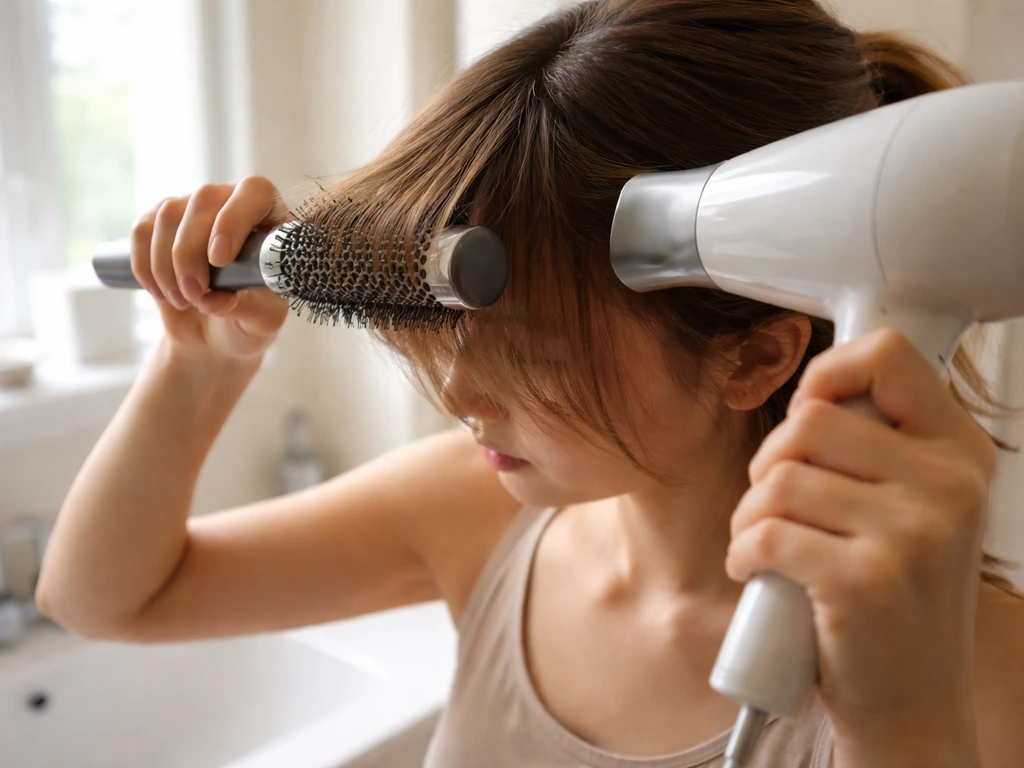
At this stage your options are limited, but you have a few that actually work. A side sweep is your best friend: blow dry the bangs to one side while they're slightly damp, using a round brush or even your fingers, and hold with a light-hold spray. At this length the fringe will often spring back to center, so consistency matters. Do it every time you style and it trains the hair over time. Bobby pins and small claw clips tucked at the temple are also genuinely useful here, not just as a workaround but as a deliberate style. Tuck the fringe behind the ear and use one small pin to keep it flat. It looks purposeful rather than pinned-back-in-defeat.
Stage 2: At the eyes and cheeks (months 3–6)
This is the hardest stretch. The fringe is hitting your eyes, it's too long to sweep easily without product, and it probably flips outward or puffs up. A half-up style is your go-to: take the top section of hair (including the bangs) and twist or clip it back loosely at the crown. This keeps the fringe off your face without the harsh look of fully pinned-back bangs. You can also use a headband, though a thin one works better than a wide one at this stage because it doesn't create a shelf that emphasizes the fringe length.
Side-swept styling still works here, but now you can be more decisive about it. Use a low-heat setting on a flat iron or a small round brush with a dryer to direct the bangs consistently to one side and off the face. The direction you choose now becomes the natural fall direction over time, so pick one side and stick to it.
Stage 3: Cheekbone to chin (months 6–9)
Once bangs reach the cheekbone and below, the hardest part is over. At this point you're mostly managing layers and face-framing. Let the front sections blend with soft waves or a loose blow-dry. If you're wearing your hair down, a little curl or wave in the front pieces stops them from looking like a separate section. If you wear your hair up, these pieces become natural face-framing strands that look intentional.
Tools and products that actually help
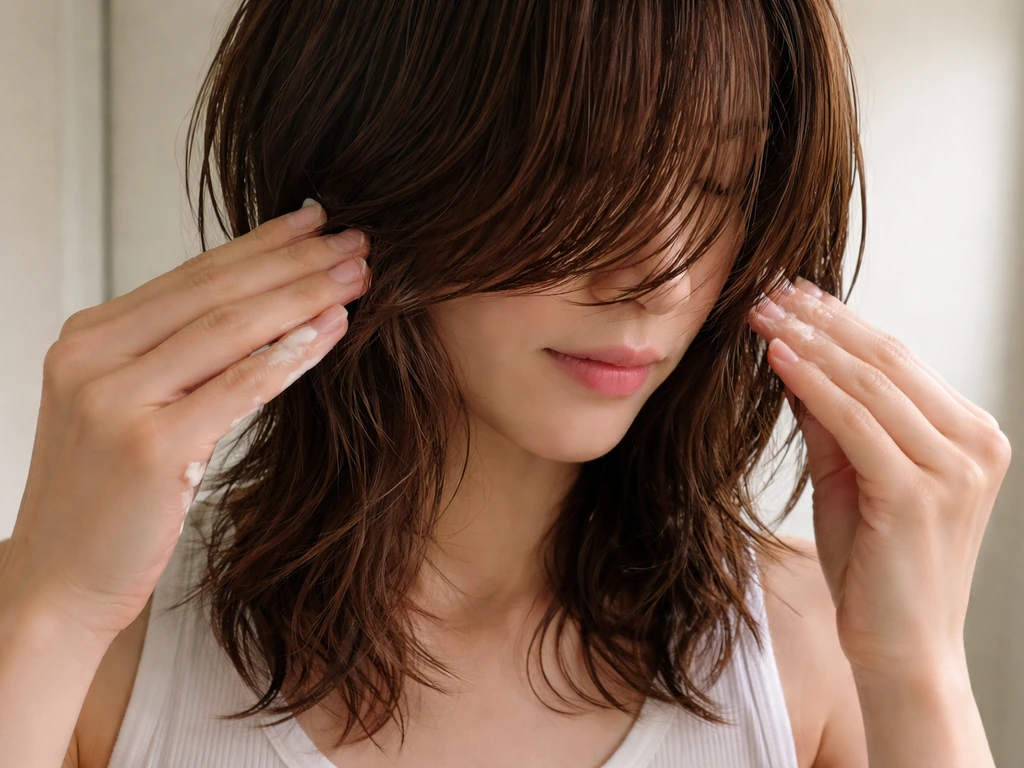
Over 50, your hair likely needs more moisture than it used to, which means heavy-hold products that stiffen the hair will backfire. You want flexible hold with added hydration. Here's what works well across each stage of the grow-out.
- Light-hold pomade or styling cream: gives control without the crunch, works well on gray or coarse hair to smooth flyaways and direct the fringe
- Anti-humidity spray or serum: essential for gray hair, which is more porous and absorbs moisture from the air, causing frizz and undoing your training
- Small round brush (1 inch or 1.5 inch): useful for directing the fringe while blow-drying without pulling too hard on finer or thinning hair
- Bobby pins and small jaw clips: look for matte-finish ones that blend with your hair color; they look deliberate rather than temporary
- Low-heat flat iron or mini curling wand: good for training direction once bangs are long enough to hold a bend; use a heat protectant every time
- Silk or satin pillowcase: reduces friction on dry, brittle hair overnight and prevents the bang section from waking up in the wrong direction
- Dry shampoo: lifts root area without adding weight, useful for keeping the fringe from going limp between washes
Skip the heavy gels and waxes. They add stiffness that makes thinning or fine hair look worse and create buildup that can clog follicles at the hairline over time. If you want stronger hold in a specific spot, a small amount of pomade just on the root area of the fringe gives control without coating the whole length.
Specific challenges that come up at this age (and how to handle them)
Cowlicks and stubborn growth patterns
Cowlicks at the front hairline are common and they become more noticeable as hair thins a little because there's less surrounding density to suppress them. The best approach is to work with the direction rather than fight it. When blow-drying, follow the cowlick's natural direction first to smooth it down, then gently redirect it with a brush before it cools. Heat-style while the hair is still warm, then let it cool completely in position before touching it. A small amount of pomade applied directly to the root of a cowlick while blow-drying gives it something to hold onto.
Thinning at the hairline
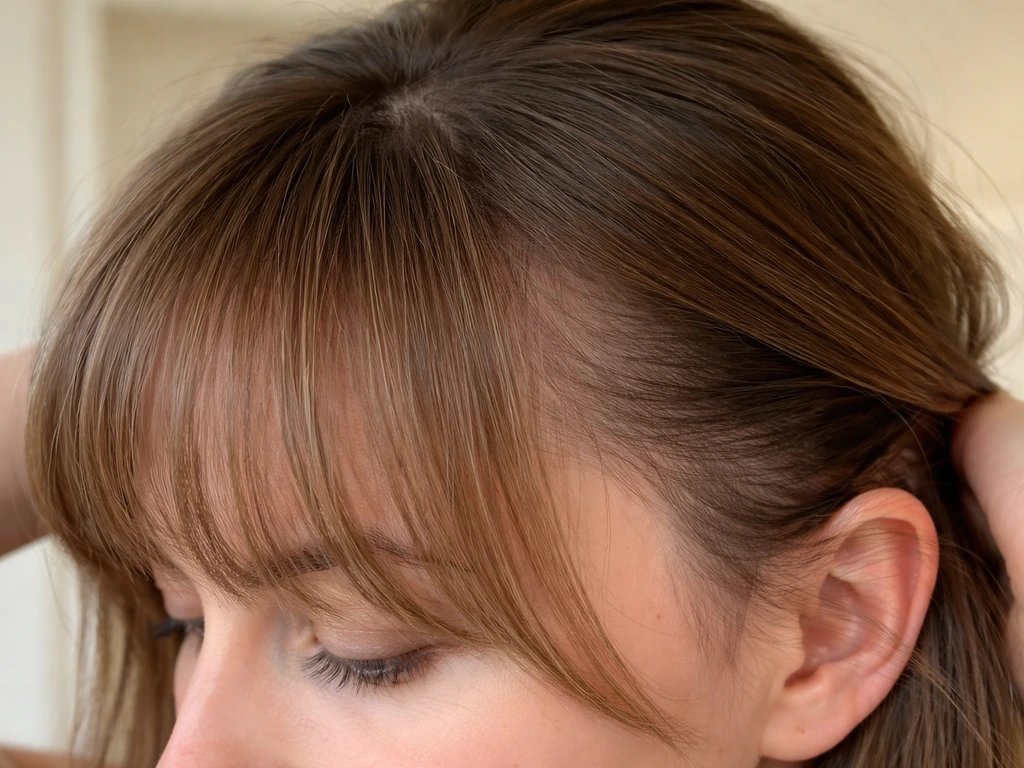
If your hairline has receded or thinned at the temples, a full blunt fringe growing out can look sparse in those corners. The solution at the cutting stage is to ask your stylist to taper the sides of the fringe, not cut them to a sharp line. A soft, tapered edge hides gaps better than a straight line that exposes where the density thins. During styling, avoid pulling the fringe too tightly to one side, as that can pull on an already-delicate hairline area. Side-sweep loosely so the hair sits naturally rather than being stretched across the scalp.
Dryness and breakage in gray or coarser hair
Gray hair is structurally more porous, which means it loses moisture faster and breaks more easily under heat or tension. During the grow-out, the fringe section gets more heat styling than any other part of your hair, which increases the risk of breakage at exactly the spot you're trying to grow. Use a heat protectant every single time you use a dryer, flat iron, or wand on the fringe. Deep condition or use a moisture treatment at least once a week. Gentle, low-manipulation styling between heat sessions (like side-sweeping with a clip rather than heat) extends the time between heat exposure.
Gray hair that won't lie flat
The wiry texture of gray or silver hair can cause it to spring up or stand away from the scalp, especially at the fringe area. A light anti-frizz serum or smoothing cream applied to slightly damp hair before blow-drying makes a real difference here. Work it through the fringe section before applying heat, then dry downward rather than upward. Finishing with a cool shot from the dryer helps lock the cuticle down.
When to reassess, and when to get professional input
If you find yourself seriously thinking about cutting the bangs back, pause and try one salon visit focused only on blending and face-framing before you do. A good stylist can often rescue a grow-out that feels unmanageable just by adjusting the shape around the fringe, removing bulk, and helping you see how the sections connect to the rest of your cut. This is worth doing before giving up on the process.
On the other hand, if you're noticing significant shedding (the AAD considers normal shedding to be roughly 50 to 100 hairs per day, while Harvard Health notes telogen effluvium can involve around 300 or more), or if the hairline is visibly receding in a pattern that looks like more than normal thinning, that's worth addressing with a dermatologist or trichologist. A dermatologist can determine the cause or type of excessive shedding by distinguishing shedding from hair loss [significant shedding](https://www. aad.
org/public/skin-hair-nails/hair-care/hair-loss-vs-hair-shedding/). The Mayo Clinic advises seeing a specialist early when you notice hair loss because some causes are time-sensitive to treat. Conditions like androgenetic alopecia, telogen effluvium, iron or vitamin D deficiency, or thyroid changes can all show up as or worsen thinning at the hairline, and a dermatologist can run the appropriate blood work or use dermoscopy to determine what's happening.
None of that means you can't also be growing out your bangs at the same time, but it's worth addressing so you know what you're working with.
A realistic check-in point: if by month 4 or 5 your fringe still looks chaotic despite consistent styling and trimming, book a salon appointment specifically to discuss a transition cut, not a trim back to full fringe. Tell your stylist your goal is to blend the fringe into face-framing layers and ask them to shape the rest of your cut to support that direction. A cut that's designed to grow out gracefully looks completely different from one that's just maintaining the status quo. If you want, you can also plan your trims around a clear timeline of stages to make the awkward middle easier to manage.
Keeping yourself from cutting them again
The hardest moment is usually around weeks 6 to 10, when the fringe is irritating enough that cutting it back feels like instant relief. It is instant relief, but it also resets the clock. If you're in that window, commit to two weeks of daily side-sweeping with a clip, do not look at your fringe critically in mirrors throughout the day, and remind yourself that this specific length is temporary.
Photos from this period never look as bad as they feel in real time. Getting through that 6-to-10-week window is genuinely the biggest barrier between you and a successful grow-out. If you’re trying to grow out your bangs without looking awkward, planning for this 6-to-10-week window is the difference between giving up and feeling confident how to grow out your bangs without looking awkward.
People who grow bangs into curtain styles or longer face-framing pieces often find the end result is worth the awkward middle, especially since curtain-style pieces and soft face-framing tend to flatter faces over 50 very well. If you’re aiming for a curtain hairstyle, the same side-swept and face-framing techniques can help you grow the bangs into soft, blended layers. The grow-out path is the hard part; the destination is usually something you'll actually prefer.
FAQ
What trim schedule should I follow if my bangs grow unevenly or I have cowlicks that disrupt the shape?
Keep the 6 to 8 week maintenance rhythm, but ask your stylist to trim to your cowlick pattern, not just your overall fringe length. Specifically request a softer perimeter with slight side tapering, so the bulk that flares at the cowlick grows out more gradually instead of forming a noticeable ridge.
Should I use dry shampoo on my bangs while growing them out, especially if my scalp gets oily?
Use it sparingly and only at the roots, because heavy buildup makes wispy or thinning areas look worse and can increase friction at the hairline. Apply lightly, then brush through the fringe and avoid letting product sit in a thick layer before styling.
How do I manage bangs that are splitting or looking frizzy as they grow past the eye line?
Switch to a smoothing cream or light serum on slightly damp hair and use less heat than you think you need, blow-drying with tension rather than repeatedly re-heating. If the ends feel rough, ask for micro-trims at the perimeter during maintenance visits instead of cutting the middle back to “fix” the split look.
Can I grow them out without heat, or will it always look messy during the middle?
You can reduce heat, but you will likely need a stronger training tool for the awkward stage. Try clip or pin positioning right after washing while hair is still damp, then let it dry fully in that direction, using a flexible holding spray only at the fringe section.
What’s the safest way to style when my bangs start hitting my eyes, but I wear glasses?
Choose styles that move the fringe off the lens area without pulling it taut, like a loose half-up twist or a side sweep anchored with one small pin at the temple. If glasses press on the fringe, keep the fringe slightly behind the temple so the pressure does not create a permanent bend or thinning line where the frame rubs.
Do I need to change my haircut plan if I have thin hair at the temples or a receding hairline?
Yes. During transitions, ask for a tapered side edge on the fringe and blend the face-framing layers to start higher on the cheek, so gaps in the corners are less exposed. Also avoid stretching the fringe tightly to one side when styling, since tension can worsen the look around a thinning hairline.
How can I tell whether my grow-out plan is working by month 4 or 5?
Look for two signals: the sides begin connecting to the rest of your cut without a hard border, and your styling no longer requires constant “resets” during the day. If you still see a distinct fringe block or persistent flipping despite consistent trims and routine styling, schedule a transition-focused cut rather than reverting to full fringe length.
What should I ask for if I want the end result to be curtain bangs instead of regular bangs?
Tell your stylist you want longer layers that part toward the center and frame both sides, with the fringe tapering into those layers as it grows. In the middle stage, request that the sides be shaped to naturally curl or wave away from the face, so the “bangs” read as intentional curtain framing once they reach cheekbone level.
How do I prevent breakage on the fringe since it gets the most heat?
Limit direct heat passes on the fringe, always use heat protectant before any dryer, iron, or wand work, and schedule moisture treatments weekly. If you must touch up, only re-style the top layer or perimeter after it cools, rather than repeatedly heating the same spot while it is dry and brittle.
Is it normal to feel shedding or notice thinning specifically around the bangs during the grow-out?
Some shedding can be normal, but if you see a visible patch, rapid thinning pattern, or significant shedding that doesn’t slow down, get checked. Ask a dermatologist or trichologist to rule out causes like iron or thyroid issues, since addressing the underlying problem can make the grow-out look fuller and help your hair tolerate styling stress better.